
This decision is not planned by anyone. It usually comes at 2 a.m., one side of the jaw hurting, and by morning you’re in a chair being asked to decide. Save the tooth! Or get it out. Both are appropriate remedies. Neither is a penalty. But they come up with quite different mouths five years later, and that element is rarely described well.
First Things First - What Is Root Canaling
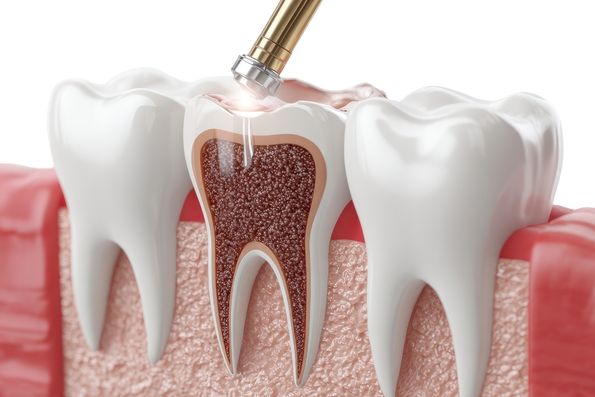
What is root canaling in simple terms? This involves the removal of the dead or sick soft tissue inside your tooth, and then the empty hole is sealed. The outer tooth remains. Only the interior is replaced.
Inside every tooth there is a soft core. Nerves, blood supply, that sort of thing. Decay reaches it, bacteria get in, and the core dies. That is the pain you feel. Remove that core, disinfect the hollow channels, fill them up, put a cap on top. Done. People still imagine drills and screaming. Anaesthesia has moved on. Most of our patients say it felt like a longer filling appointment, nothing more.
What About Extraction? When It Is Simply Removed
Occasionally, there is no longer anything to be saved. A tooth with a midline fracture. The long-standing infection has caused the roots to become soft. Gum disease has already dissolved the bone support. In those instances, saving it merely delays the same result, resulting in additional expenditures.
Wisdom teeth are distinct. Typically, they are not noticed by anyone.
However, patients overlook the fact that the gap is not permanent. Teeth are in motion. The one that is situated above it collapses in an attempt to establish contact. The space contains food packets. Chewing translates to the opposite side, which experiences accelerated wear and tear. Therefore, an extraction is not the conclusion of the expenditure. Typically, a bridge or implant is installed within a year or two.
Canal Teeth In Contrast To Empty Spaces
Your canal teeth, remain your teeth. That is of greater significance than it may appear. Bone is only thick when a root is pressing into it, and your root is situated within it. The ridge begins to contract as the root is removed. Gradually. In a low voice.
The bone remains occupied by a tooth that has been treated.
The act of chewing is also considered normal. No implant, regardless of its quality, provides the same level of feedback to the brain as a natural root. Enquire with an individual who possesses both.
How long do canal teeth last? Yes, frequently for decades, with a crown on top. They are susceptible to fractures in the absence of a crown. The treatment is only half of the equation; the cap is the other half, which is the honest catch that no one mentions. We exert considerable pressure on patients regarding this matter. By neglecting the crown, individuals may lose a tooth that they have already paid to preserve.
A thorough consultation for root canal treatment in Garia will inform you whether the tooth is sufficiently robust to warrant the effort.
Indications That You Are On The Brink Of Making This Decision
Teeth rarely undergo collapse overnight. For months, most people ignore the warnings.
- Not only does it cause discomfort when chewed on, but it also wakes you up at night.
- A tooth that has developed a faint grey hue in comparison to its neighbouring teeth
- Gum swelling, occasionally accompanied by a small lump that subsides and resurfaces
- Sensitivity to hot food that persists after the meal has been consumed
- An antiquated filling that continues to detach from the same tooth
We recommend having any of these examined while the tooth is still salvageable. The window does indeed close.
Where Canal Root Surgery Comes In
Not all cases are straightforward. Occasionally, an infection remains at the root tip and refuses to resolve, despite a thorough cleansing. Or, a tooth that was previously treated experiences a recurrence.
That is when canal root surgery gets discussed. A small procedure at the gum, reaching the root tip from outside, trimming off the infected end and sealing it. Apicoectomy is the technical name for it. Local anaesthesia, usually under an hour.
Canal root surgery is not the initial treatment option. This is a lifesaver for teeth that would have been extracted otherwise. The success rate is satisfactory when the individual performs the task on a consistent basis.
The Cost Argument, Done Honestly
Extraction is cheaper on the day. Obviously. Not always by much, though.
Then comes the replacement. Bridge, or implant, plus crown work on the neighbouring teeth in some cases. Add it up over three years, and a root canal with a crown almost always works out lighter on the wallet.
Unless the tooth is a lost cause, then paying to save it is money burnt.
One more thing on money. People compare the root canal fee against the extraction fee and stop right there – wrong comparison. Compare the root canal against the extraction plus whatever has to fill the gap afterwards, because you will be paying for that as well, just later. Delaying does not make it cheaper either. A small infection treated early needs less chair time than the same infection three months on, once it has eaten into the bone around the root.
So Which One Wins?
Depends on what is left of the tooth. That is the whole answer.
Enough solid structure above the gum, decent bone, no vertical crack running down it – we save it – every time. Shattered tooth, floating in soft bone, repeated failed treatment – out it comes, and we plan the replacement straight away rather than leaving you with a hole for months.
You can solve maximum disruptions in approximately four minutes using an X-ray. The inference of pain severity from discomfort is not effective; some dying teeth cease to hurt wholly, leading individuals to falsely believe that the issue has been resolved.
How We Handle It At Epion
Dr Niladri Sekhar Bakshi is an oral and maxillofacial surgeon, so both routes sit under one roof here in Garia, Kolkata. Nobody gets sent elsewhere halfway through.
We will show you the X-ray. We will tell you if the tooth is worth saving, including when it is not. Some patients arrive expecting what is root canaling to be some frightening ordeal, and leave slightly annoyed that they waited three months in pain for it.
Booking with a dentist in Garia takes one phone call – +91-8276910505.